The AF sensor measures focus offsets of around a millionth of a metre. Every part between it and the image sensor has to stay where it was when the camera was calibrated, to within that sort of distance. Here’s what can move.
The AF module
The AF module sits at the bottom of the camera, guiding light to the AF sensor so it can measure focus at each focus point.
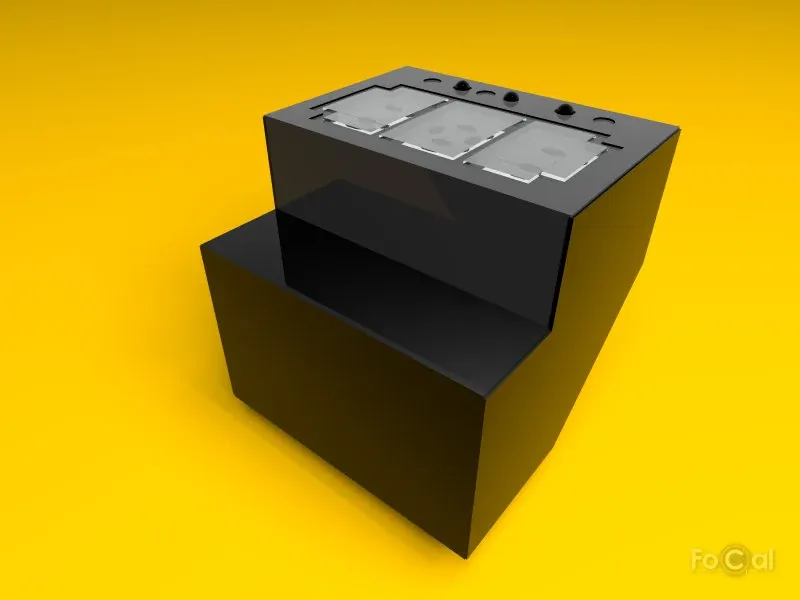
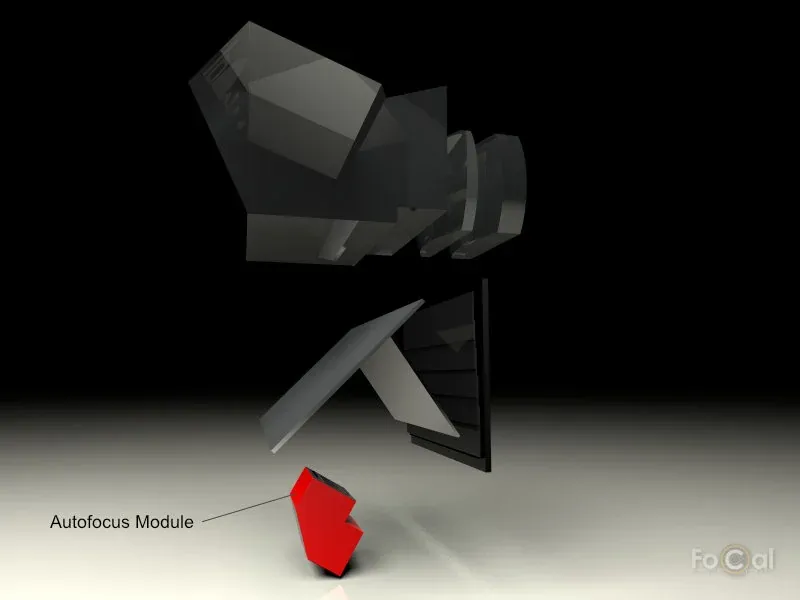
It’s held in place with brackets, nuts and bolts, and its position can even be adjusted with a screw. Inside, it’s a complicated optical assembly: field lenses, masks and baffles so only the intended light gets through, a mirror, separator lenses, and the AF sensor chip itself, all mounted and glued together.
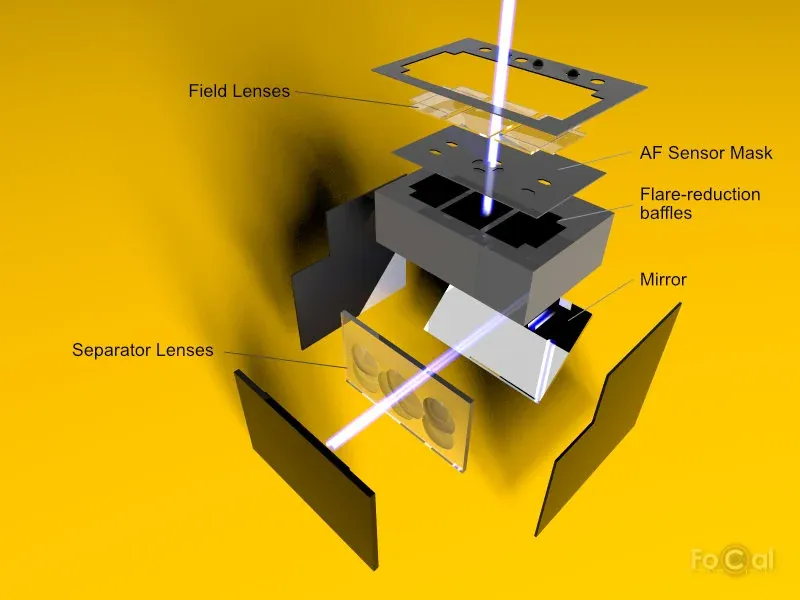
What happens if the module moves, or one of the parts inside it slips a fraction from where it was glued? Or the parts expand and contract a little between a freezing morning and a baking afternoon?
When that happens, the AF module still takes its measurement, but the calibration data that tells the AF processor where to move the lens no longer matches the camera. The result is a picture that isn’t as sharp as it should be.
The mirrors
The AF module doesn’t look straight at the scene. Its light comes through the lens and bounces off two mirrors first.
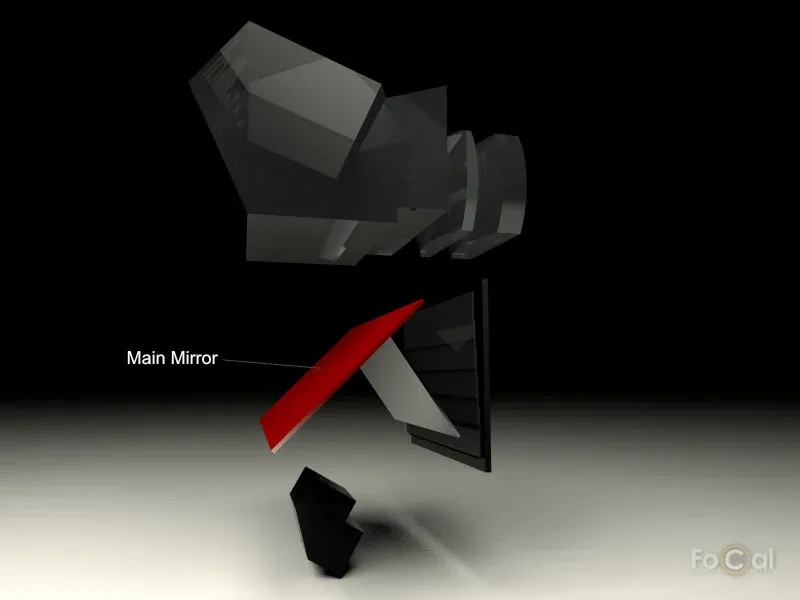
The main mirror flips up and down for every shot. When it comes down, it bounces a few times and settles against its seats. Wear, temperature and a speck of grit can all change exactly where it comes to rest, and that moves the secondary mirror behind it too.
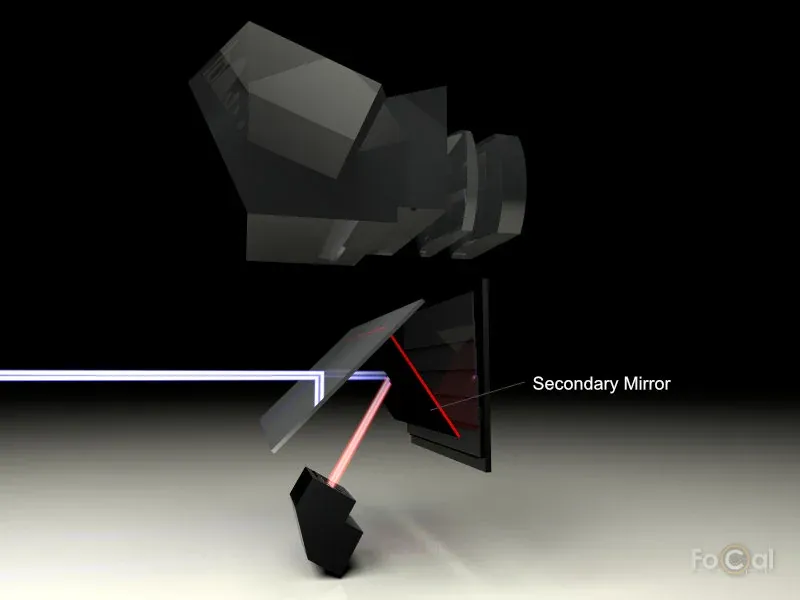
The secondary mirror is hinged so it can fold away behind the main mirror for each shot. Thousands of folds later, it may not settle in quite the same place. Any change in its angle changes the light reaching the AF module.
The image sensor
The image sensor’s position matters just as much: it’s the other half of the relationship.
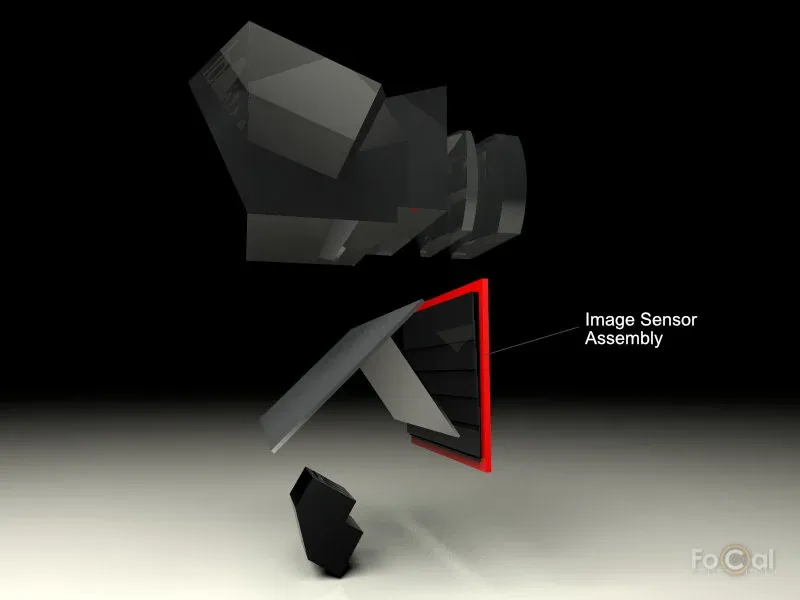
Like the AF module, it’s fixed to a back plate with brackets and adjustment screws. It only has to move by millionths of a metre to cause focus errors, and months or years of use can do that: knocks against your hip while it hangs from a strap, bumps in a bag, and the shutter in front of it opening and closing thousands of times.
The lens mount
If the lens mount shifts, the lens sits slightly differently, and so does the light reaching the AF module.
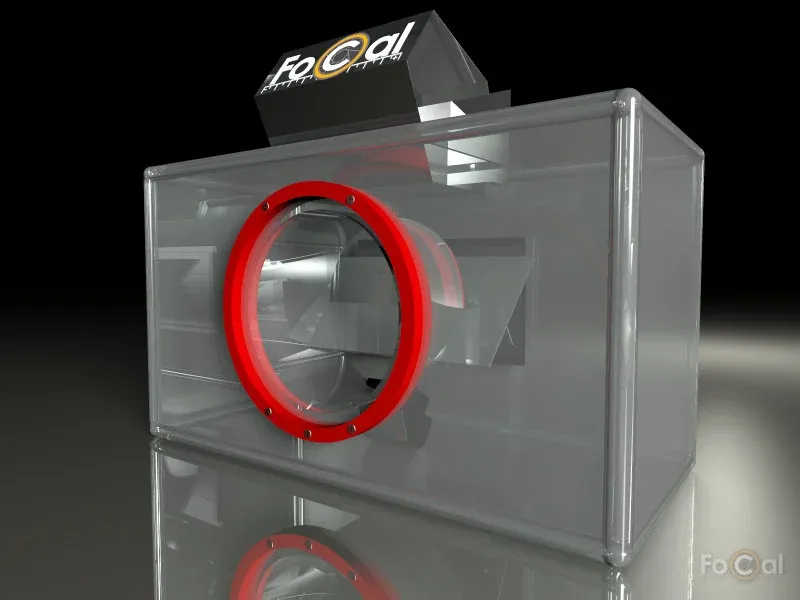
Walk around with a heavy 70-200mm f/2.8 on the front of the camera, hanging from the shoulder strap, and every step puts a load on that mount.
The lens
The lens is a complex machine of its own, and it can throw the focus out through:
- its own mount,
- the optics: tilted or decentred elements, or a misbehaving image stabiliser,
- the mechanics: motors, gears and rails that wear or were never perfectly precise,
- temperature, which changes the size of everything a little,
- the correction data stored in the lens when it was made.
The lens is covered in detail in the lens chapter of the mirrorless guide. All of it applies to DSLRs too.
None of these is a fault. They’re tiny, normal changes in a precise machine. But the camera can’t see them, so it can’t correct for them.
Next: what you can do about it.